Milestones count lit days, not dates
The gold gates open on your 1st, 7th, 14th, 21st and 30th lit day. Miss a day and the gate is not cancelled: it simply arrives a day later.
Android · Early beta
You set the daily focus goal. Every day you reach it lights up on the path; every day you miss turns to ash. Ash does not come back. Meanwhile the Shield closes your distracting apps at the system level.
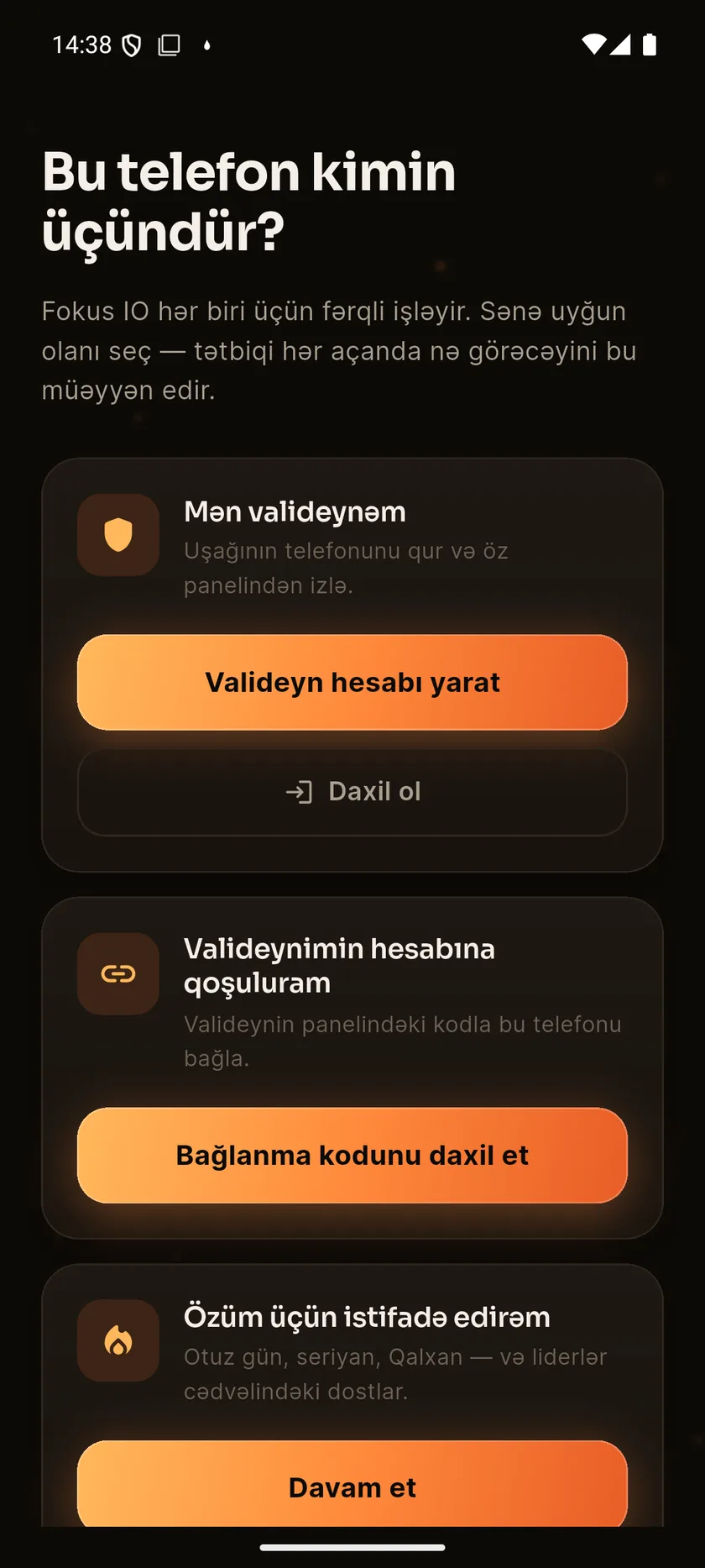
Use it on your own, or set up your child’s device as a parent.
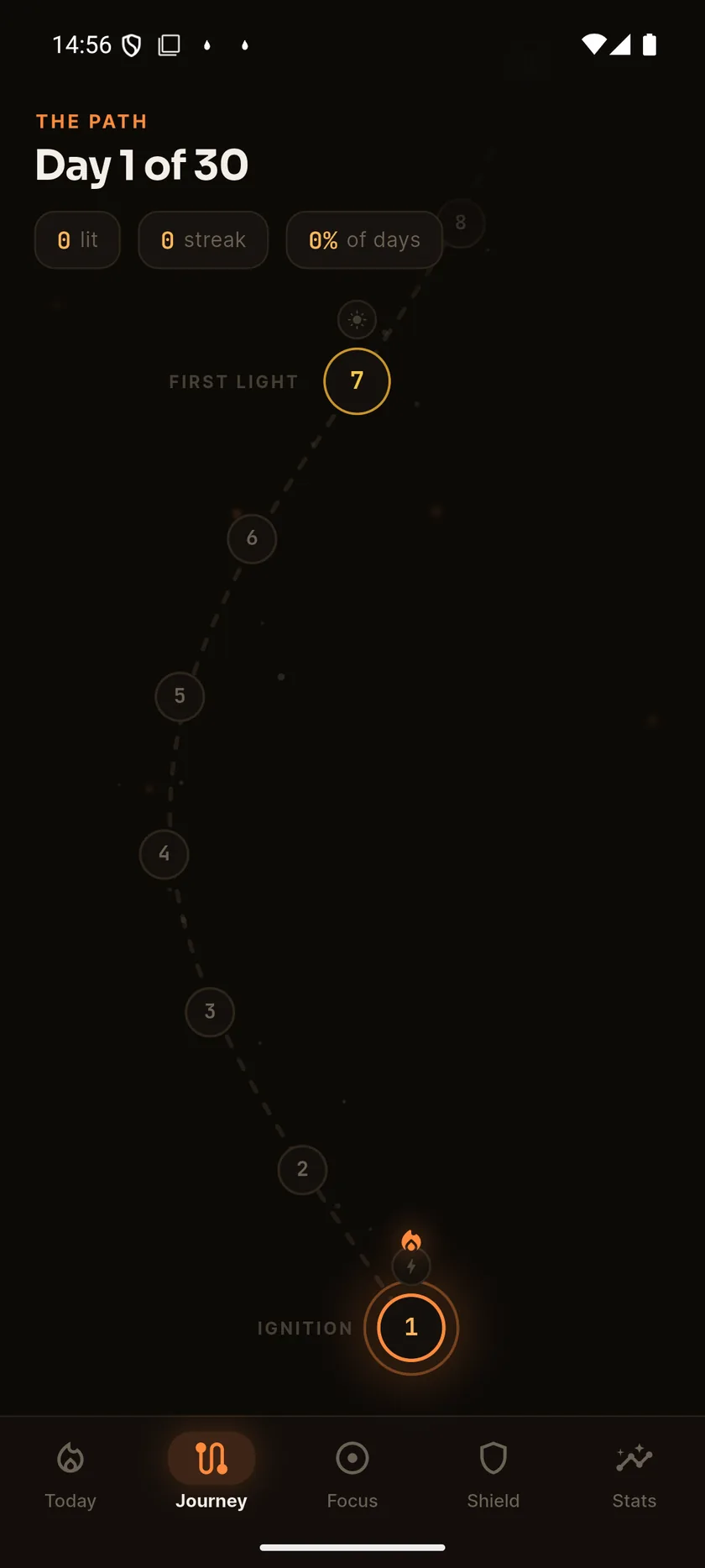
Miss a day and it is ash, and it stays ash. That is the whole reason this works.
The app’s own rule
The Path
Fokus IO counts your focused minutes. Reach the goal and the day lights on the Path. Fall short and it stays ash: there is nothing you can do later to light it.
The gold gates open on your 1st, 7th, 14th, 21st and 30th lit day. Miss a day and the gate is not cancelled: it simply arrives a day later.
Lower your goal afterwards and the days you already earned stay lit. Only what comes after today changes.
The Path resets; your session history does not. The Ledger keeps every cycle, one after another.
Focus
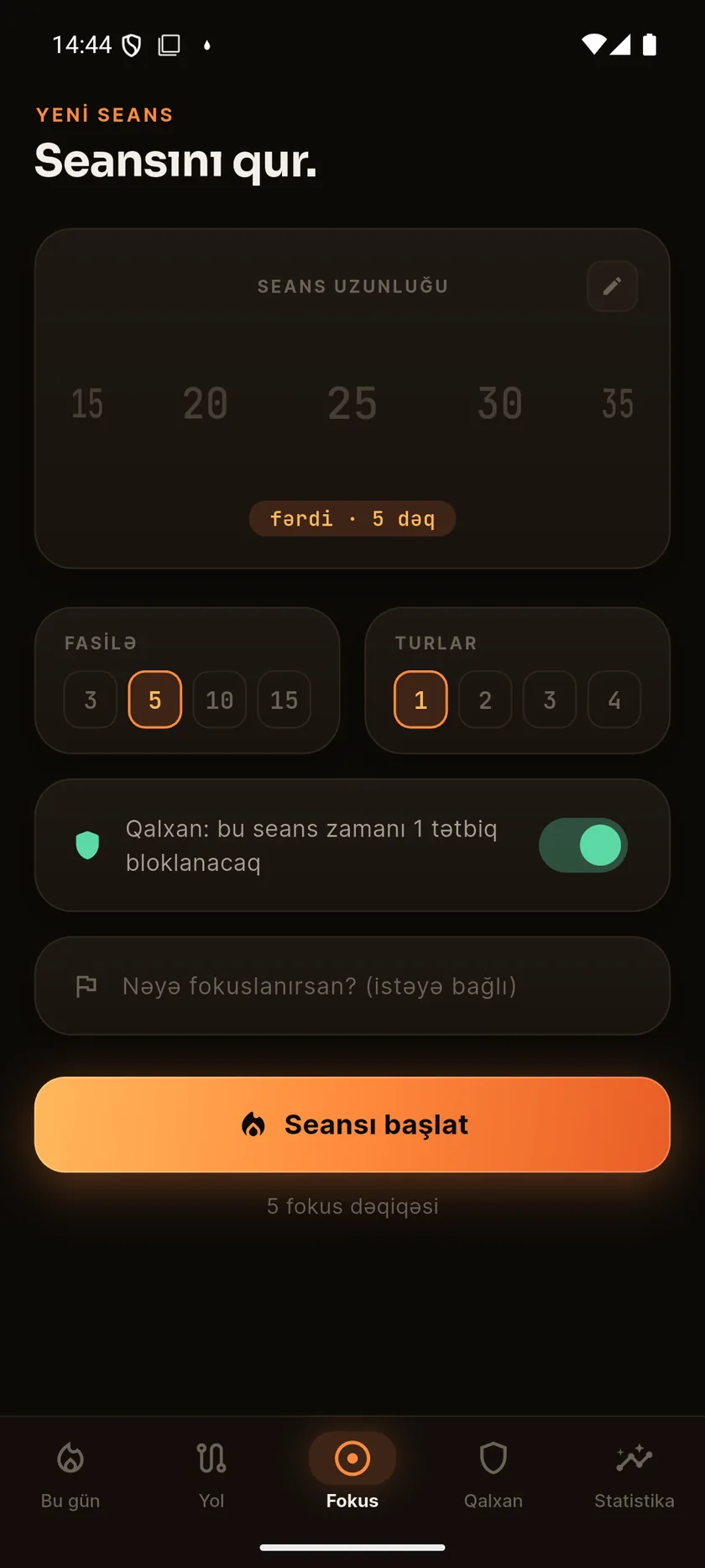
Focused minutes come from sessions. You choose the length (anywhere from 5 minutes to 240) along with the break and how many rounds. If you want, you write one line about what you are working on.
01
Length, break, rounds. With the Shield on, the apps you picked will not open for the duration.
02
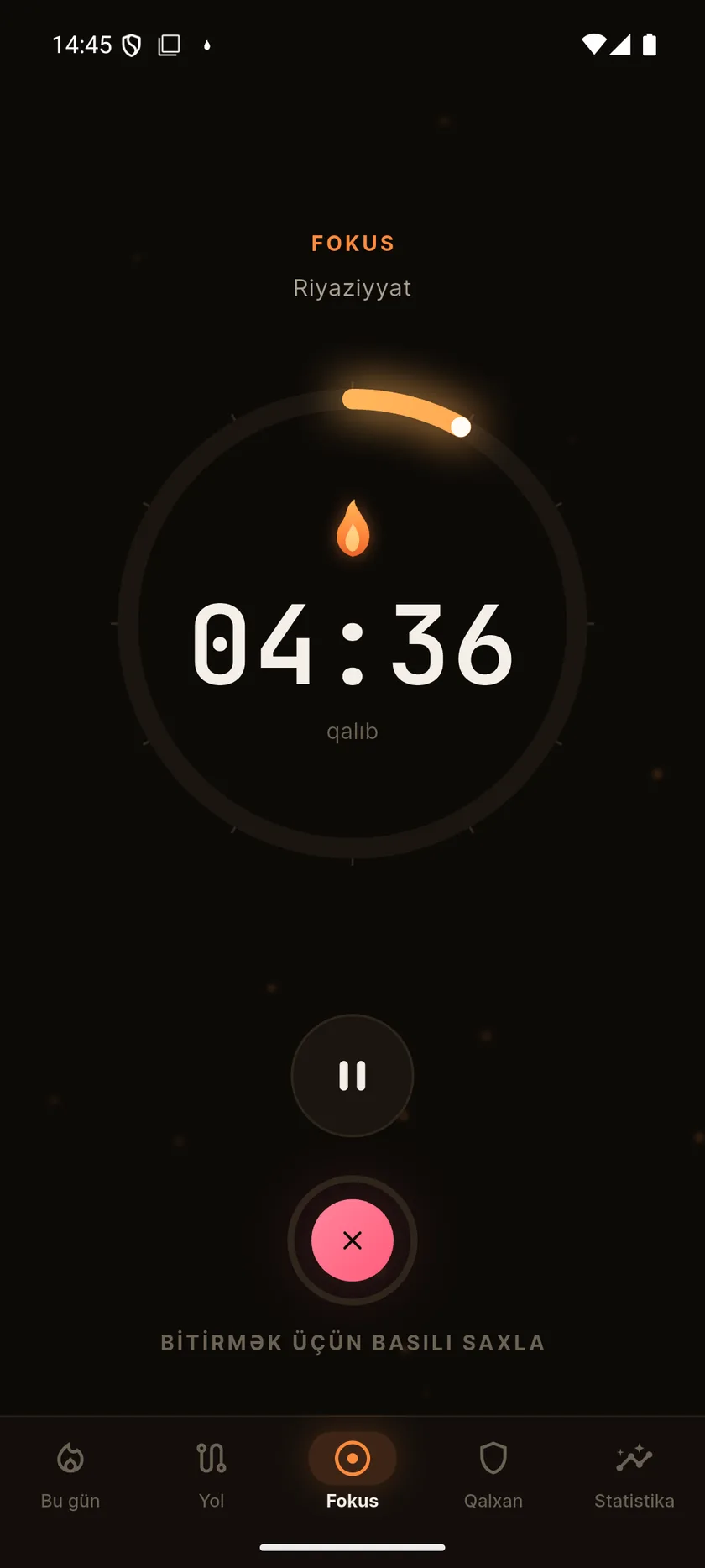
The ring fills, the number counts down. Ending early is not a tap: you have to hold.
03
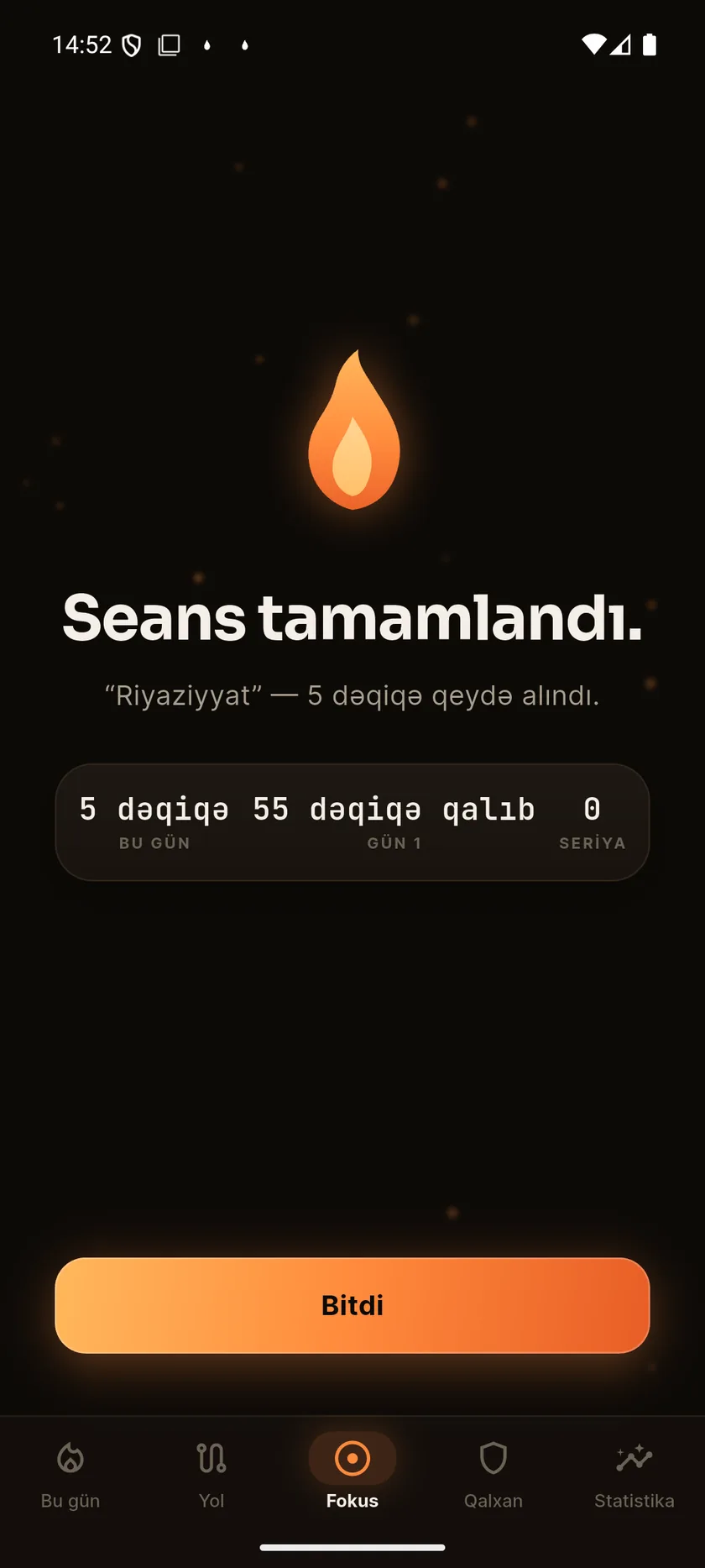
The minutes go to the day. Reach the goal and the day lights on the Path.
Remaining time is never read off a counter: it is always recomputed from a stored end timestamp. Kill the app, reboot the phone: the session is replayed on the next launch and the minutes are credited at the time they actually finished.
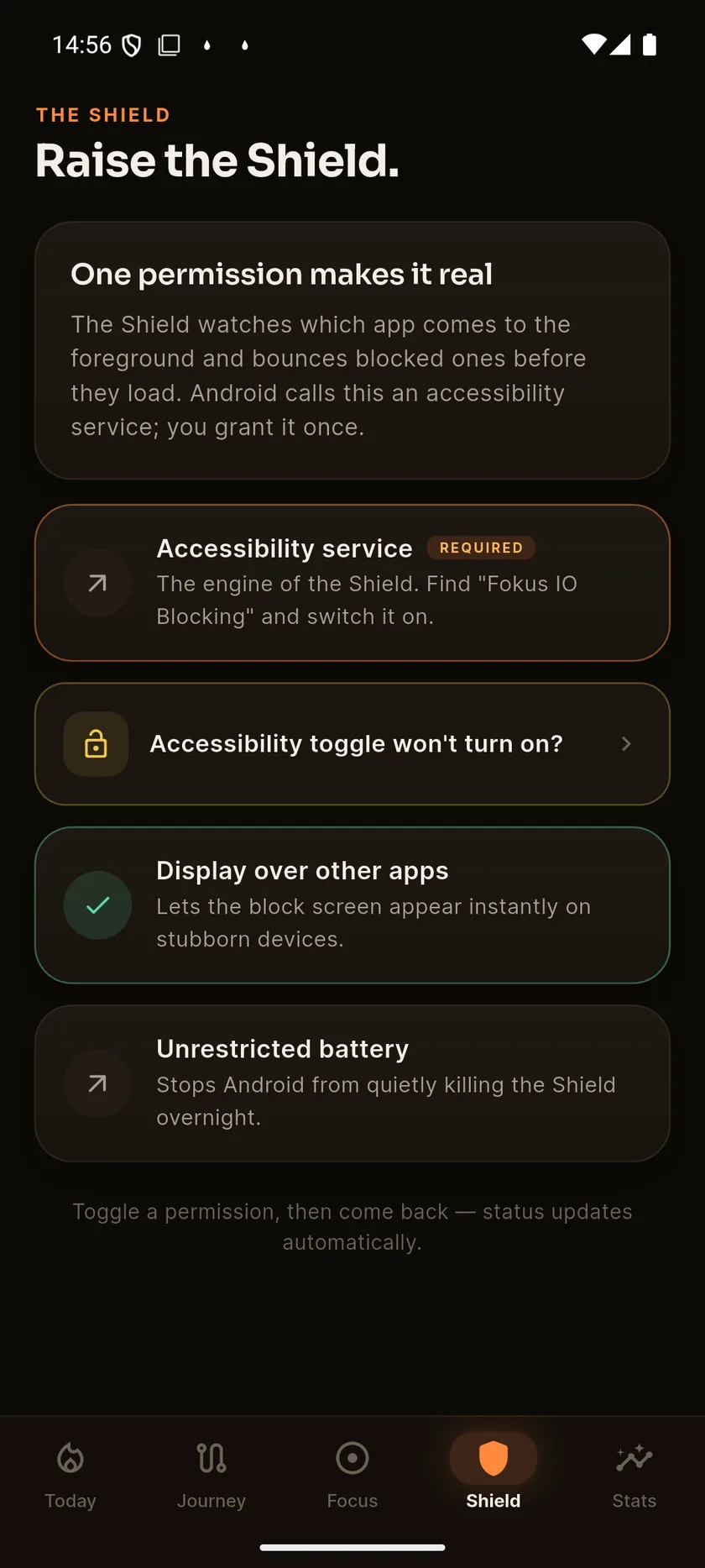
The Shield, armed
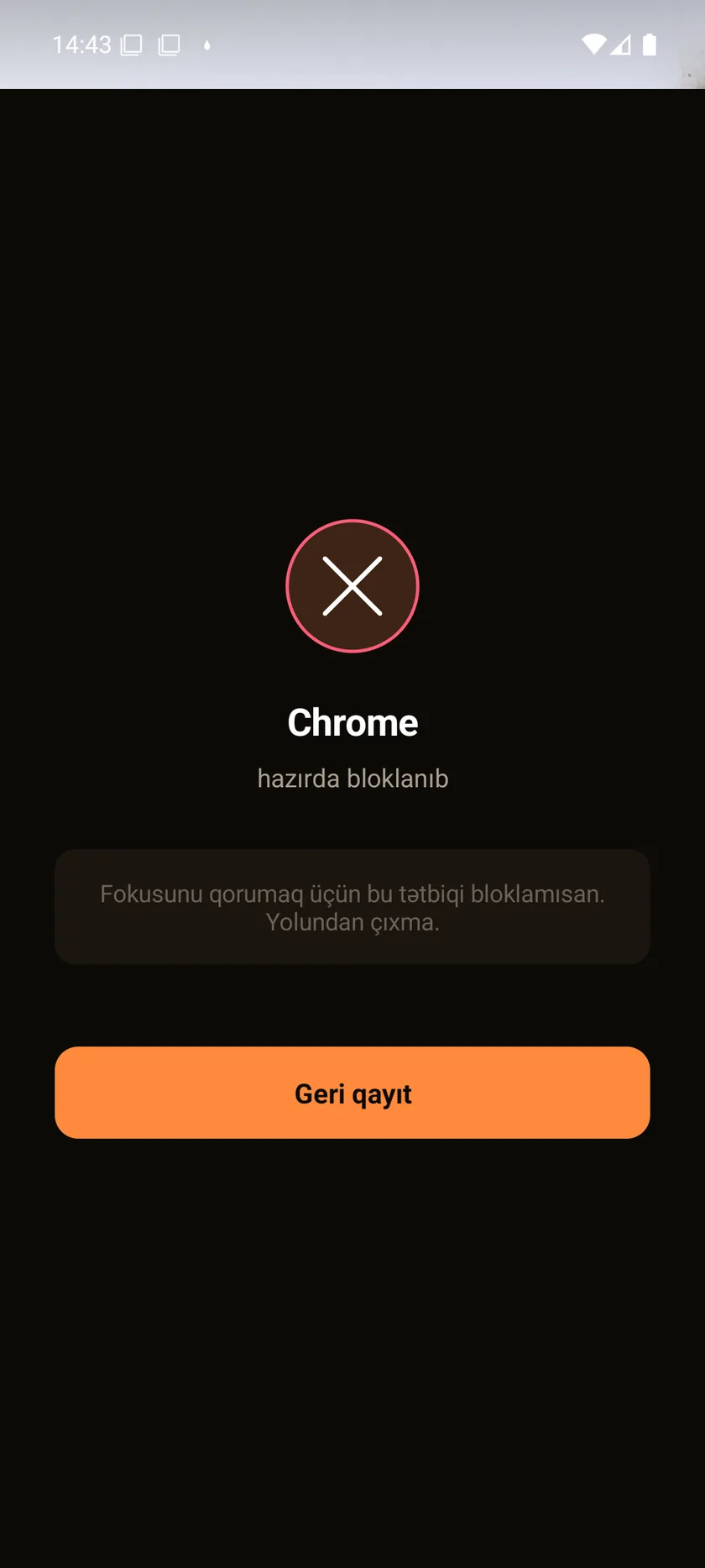
The Shield
The Shield watches which app comes to the foreground. The moment one from your list appears, Android’s own home action fires and the app closes before it has finished loading. Then the explanation screen appears.
On Android an ordinary app cannot make itself unremovable. Turning off the accessibility permission, force-stopping the app or clearing its data all stop enforcement. Fokus IO does not claim to prevent that: it detects it and reports it to the linked parent.
Blocked apps lock only while a session is running.
Blocked apps stay locked around the clock.
During the lockdown hours you choose. A window may cross midnight.
Cross your daily screen-time limit and guarded apps lock until you are back under it. Resets tomorrow.
While the Shield or a session is on, uninstalling the app is protected. Android Settings stays reachable, and the restriction is always tied to a hard deadline: a stale flag can never leave a phone locked.
Separate from the blocklist. Each limited app’s foreground minutes are recomputed from usage events, so if the allowance runs out while you are mid-scroll, you are ejected right then. Locked until midnight.
Telephony, the emergency dialer and the device’s own default phone app open regardless of what is on the list.
The Ledger
Screen time here is not an estimate. It is computed from Android’s raw usage events (foreground and background paired up, screen-off handled), which is why it matches Digital Wellbeing instead of the inflated totals most apps report.
One number from 0 to 100, built from four parts. It only appears after at least three active days.
100 If no session ever offered a way around the Shield, that last part is removed and the score is recalculated over the rest. Missing data is never scored as either good or bad.
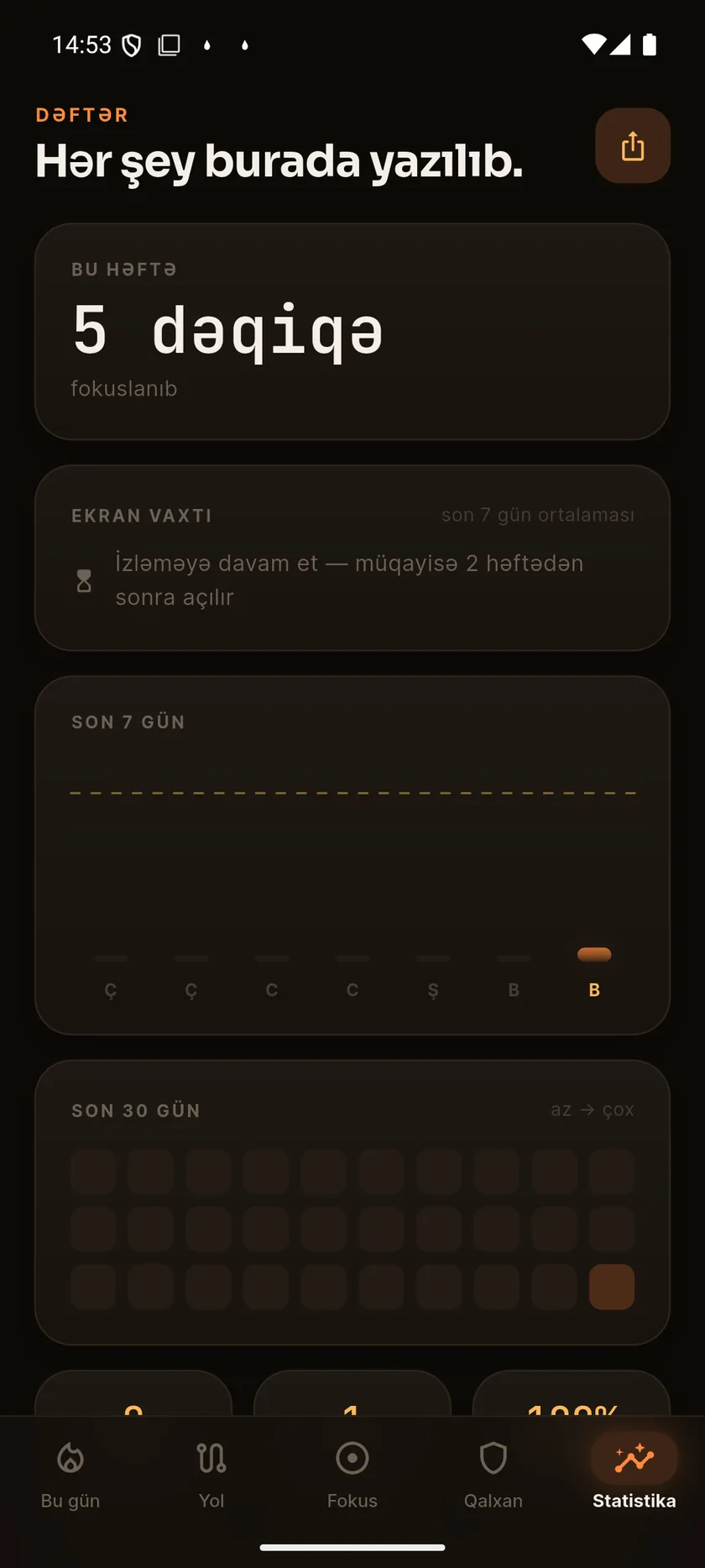
One bar per day of focused minutes.
Low to high. The whole cycle at a glance.
Family Sync
A parent signs up with an email address and proves it with a mailed code. The account is only created after that. The child joins by typing an 8-digit code or scanning a QR.
If a device has gone quiet, or the accessibility or usage-access permission has been switched off, the dashboard says so separately. A green light never hides dead enforcement.
A parent sees the last known position on a map and can ask “where are they now?”. The server keeps exactly one row per child: there is no route and no history table. Decline it and everything else still works.
A local, on-device VPN reads DNS queries and records names like example.com: never page URLs, searches or messages. There is no remote VPN server, no traffic is routed anywhere, and nothing is blocked. Kept for 14 days.
Unlink a child and their synced statistics, position and site history are deleted immediately. Deleting a linked child account waits 48 hours and can be cancelled: supervision stays fully active throughout.
Permissions
Fokus IO uses some of Android’s more sensitive permissions. Here is what each one is for. The app always shows an explanation screen before the system dialog.
The engine of the Shield. All it learns is which app came to the foreground. It does not read screen content. That is switched off in the service’s own configuration.
Screen time, top apps, per-app limits and the numbers in the Ledger.
Makes the block screen appear instantly on stubborn phones.
Stops Android quietly killing the Shield overnight.
Three messages, no more: a session ending, an optional daily reminder, and the screen-limit warning.
Keeps the process alive while a block is armed. Always shows a permanent notification.
Scanning the parent’s QR link code. Nothing else.
The parent’s map. Background access is requested separately, and only after foreground access is granted.
Site history. Entirely on-device: it reads DNS queries, forwards them unchanged, blocks nothing, and has no remote server.
Friends only. Numbers are hashed on the device, matched in memory and discarded. Unreachable from a family account.
Lets a parent choose from the apps actually installed on the child’s device, and lets the blocker compare the foreground app against that list.
Without Family Sync, your journey, sessions, settings, Shield configuration and most usage summaries never leave the device. Data is sent only when Family Sync (or Friends) is deliberately set up.
Questions
There is a free tier, and it is a real one: the thirty-day path, focus sessions, blocking up to three apps and the basic screen-time figures cost nothing. No ads, and no data sold — that part has not changed. Optional paid plans unlock the rest.
On your own phone: unlimited blocked apps, daily per-app limits, blocking on a schedule, Strict Mode, and the full statistics — monthly heatmap, trends and complete session history. For a parent: the full dashboard, remote blocking with no cap, screen-time and per-app limits on the child’s device, schedules, device lock, location and site activity, and on the Family plan up to five children. Plans start at 2.99 AZN a month, with a cheaper yearly option; Google Play shows the exact price in your own currency before anything is charged.
Nothing you already set is switched off, and nothing gets stuck. A parent whose plan lapses keeps every control already running on their child’s device, and can always release them — unlock, unblock, lift a device lock, turn Strict Mode off, unlink — whether or not they are subscribed. What lapsing stops is setting up NEW paid controls until you subscribe again. A subscription must never be able to strand a child behind a lock their parent cannot lift.
Yes, and it is separate from the plans. A one-off voluntary payment through Google Play that unlocks nothing at all; leaving it alone changes nothing.
Not yet. Fokus IO is in early beta and the store listing is still being prepared. That is why there is no store badge on this site: we are not going to put a button here that leads nowhere. Write in to join the beta.
No. There is partial Screen Time work for iOS in the codebase, but parental controls, location, site history and the screen-time ledger do not exist there. Fokus IO is an Android app today.
A work block of the length you choose (5 to 240 minutes) starts, then a break, then the next round. If the Shield is on, the apps on your list will not open for the duration. Remaining time is always recomputed from a stored end timestamp, so even if the app is killed the session is replayed on next launch and the minutes are credited at the time they actually finished.
Not for solo use: no account, no email. An account is only needed for Family Sync or Friends.
Yes. The thirty days, sessions, the Shield and screen time all run entirely on the device. The internet is only needed for Family Sync and Friends.
A child cannot change the settings a parent set, and cannot end supervision on their own. But an ordinary Android app is limited in how much it can defend itself: turning off the accessibility permission or force-stopping the app will stop blocking. When that happens, it shows up on the parent’s dashboard.
No. The VPN is local to the device and records only DNS queries, that is, domain names. Page URLs, search terms, messages and page content are never recorded. There is no remote VPN server. While recording is on, the device shows a permanent notification and the system VPN indicator.
Yes. Settings → Danger Zone → Delete Account & Data. Parent and solo accounts are deleted immediately; a linked child account is deleted after 48 hours and can be cancelled during that window. If the app is no longer installed, you can ask by email instead.
Everything held on the device (journey, sessions, settings) goes with it. Export a backup first and you can restore it on a new phone.
Early beta
Fokus IO is a working app in daily use, but it has not been published to Google Play. That is why there is no store button here. Write in to join the beta, report a bug, or just say what you think: the person who answers is the person who wrote it.
Usually a reply within a day or two.